Researchers Develop Enhanced Vitamin K Compound That Prompts Brain Cell Regeneration
06/14/2026 / By Douglas Harrington
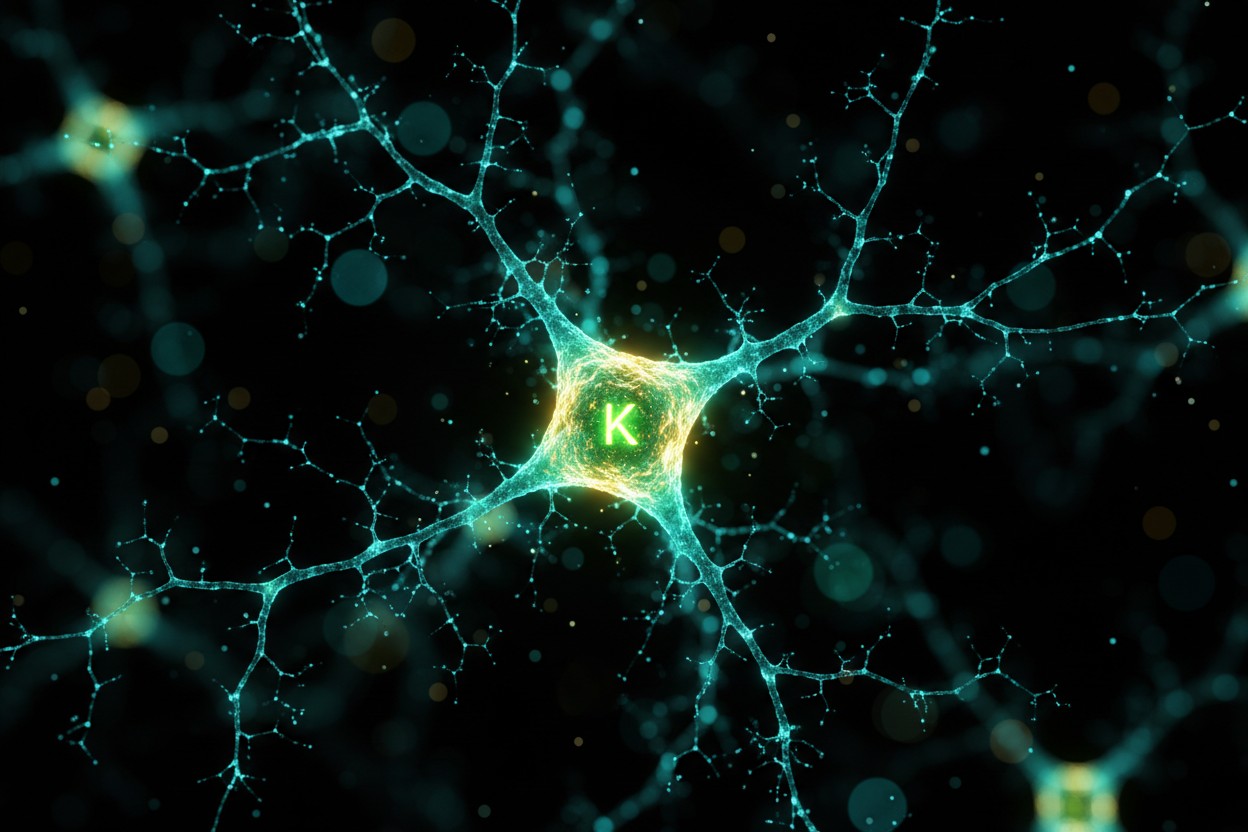
Scientists at the Shibaura Institute of Technology in Japan have synthesized a series of enhanced vitamin K analogues that demonstrated approximately threefold greater potency in inducing neural progenitor cells to differentiate into neurons compared with natural vitamin K, according to a study published July 3, 2025, in the journal ACS Chemical Neuroscience. [1]
The research, led by Associate Professor Yoshihisa Hirota and Professor Yoshitomo Suhara of the Department of Bioscience and Engineering, represents an attempt to develop compounds that could one day help address the neuronal loss characteristic of neurodegenerative diseases such as Alzheimer’s disease and Parkinson’s disease. [1]
The new analogues combine vitamin K with components of retinoic acid, an active metabolite of vitamin A that is known to promote neuronal differentiation. The researchers reported that one compound, referred to as Novel VK, showed threefold higher activity than the control in mouse neural progenitor cells. [1]
Current Treatment Limitations and Research Background
Existing therapies for Alzheimer’s disease, including lecanemab and donanemab, slow cognitive decline in some early-stage patients but do not restore lost neurons or rebuild damaged brain tissue, according to the researchers. This limitation has driven interest in regenerative approaches that could replace or repair damaged neural cells. [1]
Vitamin K is best known for its role in blood clotting and bone health. According to Whitney Eleanor Noss in “Understanding Nutrition,” vitamin K is essential for the activation of several blood-clotting proteins, and deficiency can lead to hemorrhagic disease. [2] In recent years, however, scientific attention has turned to vitamin K’s potential role in brain health. An analysis published on NaturalNews.com noted that a growing body of research indicates adequate vitamin K intake may support cognitive function and brain protection. [3]
Natural forms of vitamin K such as menaquinone-4 (MK-4) show limited potency for regenerative medicine, the researchers stated, which prompted the team to create more active analogues designed to work more effectively in the nervous system. [1]
Synthesis and Testing of the New Vitamin K Analogues
The team synthesized 12 hybrid vitamin K homologs. Some were linked to retinoic acid, an active metabolite of vitamin A that prior research has shown to promote neuronal differentiation. A study by Victoria B. Christie and colleagues in the Journal of Neuroscience Methods (2010) demonstrated that retinoid supplementation enhanced motor neuron differentiation of human embryonic stem cells in vitro. [4] Other compounds included a carboxylic acid moiety or a methyl ester side chain.
In mouse neural progenitor cells, one compound that combined the retinoic acid structure with a methyl ester side chain — designated as Novel VK — showed threefold higher neuronal differentiation activity than the control, the researchers reported. The compound also produced significantly stronger activity than natural vitamin K compounds. [1]
The researchers identified metabotropic glutamate receptor 1 (mGluR1) as a key pathway driving the effect. Molecular docking studies suggested that Novel VK binds more strongly to mGluR1 than natural MK-4, according to the study. [1] This receptor has previously been linked to synaptic transmission, and mice lacking mGluR1 show motor and synaptic problems that overlap with dysfunction seen in neurodegenerative diseases.
Biodistribution and Implications for Therapy
Mouse experiments showed that Novel VK crossed the blood-brain barrier and produced higher MK-4 concentrations in the brain than natural vitamin K, according to the study. The compound also showed a stable pharmacokinetic profile. [1]
The findings are based on cell studies and mouse experiments; no human trials have been conducted, and no vitamin K-derived drug has yet demonstrated brain repair in patients with neurodegenerative disease, officials stated. [1] Dr. Hirota said the research offers a potentially groundbreaking approach, but the long-term goal remains to move from laboratory results to clinically meaningful treatments. [1]
The broader significance, according to the researchers, is the possibility of developing therapies that do more than manage symptoms. By pushing neural progenitor cells toward becoming neurons, vitamin K-based compounds could one day contribute to strategies aimed at slowing or partially reversing neurodegeneration.
Conclusion: A Step Toward Regenerative Neurology
The study highlights a possible regenerative strategy that goes beyond symptom management by activating neural progenitor cells to form new neurons. The identification of the mGluR1 pathway provides a clearer target for future drug development, though researchers caution that the approach remains at an early stage. [1]
The work was supported by several Japanese foundations and a Grant-in-Aid for Scientific Research from the Japan Society for the Promotion of Science, as reported in the paper. [1] While the results are promising, the researchers emphasized that extensive additional research, including human clinical trials, would be required before any therapeutic application could be considered.
References
- Patrick Lewis. “Supercharged” Vitamin K Derivatives Offer New Hope for Neurodegenerative Diseases. NaturalNews.com. October 17, 2025.
- Whitney Eleanor Noss. Understanding nutrition.
- Why vitamin K may be the most overlooked nutrient for longevity. NaturalNews.com. February 9, 2026.
- Victoria B. Christie. Retinoid supplementation of differentiating human neural progenitors and embryonic stem cells leads to enhanced neurogenesis in vitro. Journal of Neuroscience Methods. 2010.
Submit a correction >>
Tagged Under:
Alzheimer's disease, Anti-inflammatory foods, Brain, brain damaged, brain function, breakthrough, cognition, discoveries, Huntington's, longevity, neurodegenerative diseases, Parkinsons, prevention, research, Study, Vitamin K
This article may contain statements that reflect the opinion of the author
RECENT NEWS & ARTICLES