Study Links Higher-Dose Vitamin D to Better Cognition in Adults With MCI and Poor Sleep
10/13/2026 / By Coco Somers

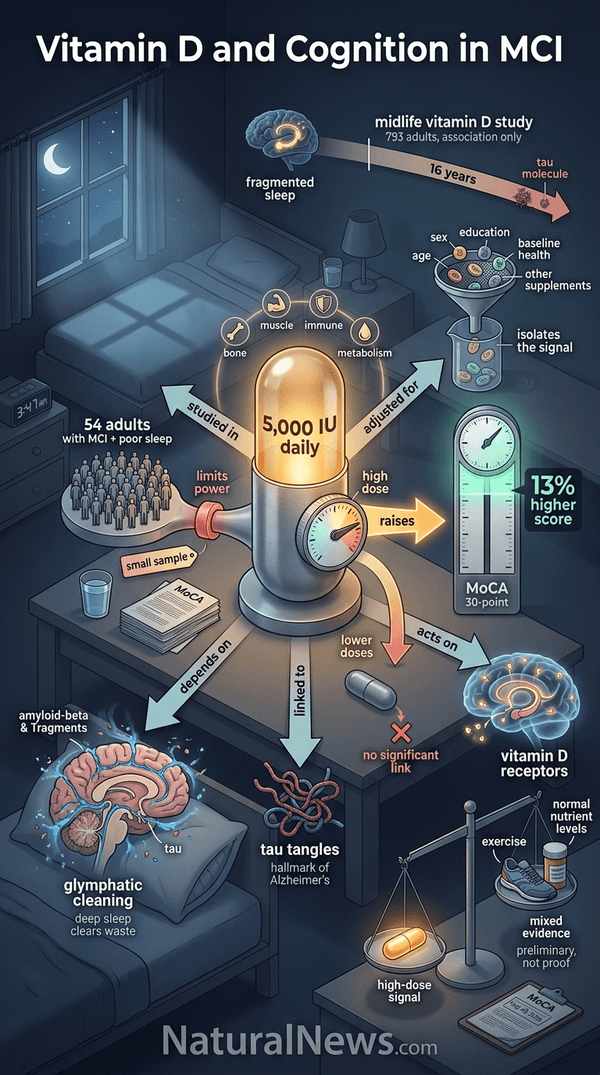
A new study has found that adults with mild cognitive impairment (MCI) who reported taking at least 5,000 international units (IU) of vitamin D daily scored higher on cognitive assessments than those who did not take the supplement daily, according to research reported in October 2026.
Researchers assessed cognitive function using the Montreal Cognitive Assessment (MoCA), a widely used screening test designed to assess memory, thinking skills, and the risk of developing dementia, the report stated [1].
The findings add to a body of research investigating the relationship between vitamin D and cognitive function, a topic that has produced mixed results in previous studies. The research was funded by the National Institute on Aging of the National Institutes of Health, and the findings were reported Aug. 23, 2026, by Emory University, according to the report [1].
Study Design and Methodology
For the study, researchers wanted to investigate whether daily vitamin D supplement intake was associated with cognitive performance in people with both mild cognitive impairment and sleep disturbance, according to the study. The study focused specifically on daily vitamin D supplement intake, not dietary or sunlight-derived vitamin D.
The analysis adjusted for these variables to isolate the potential association between vitamin D supplementation and cognitive performance.
The study was designed to investigate this specific population because sleep problems are common among people with MCI.
The broader context of sleep and cognitive health is significant. Common dietary supplements utilized to improve sleep quality include nitrates, melatonin, magnesium, zinc, vitamin D, and L-theanine, that research states [2].
Findings on Vitamin D and Cognitive Scores
The report stated that a 13% improvement remained significant after researchers adjusted for other factors [1].
Lower doses of vitamin D were not significantly associated with MoCA scores, the researchers reported [3][1]. The study authors interpreted the finding as preliminary evidence that higher-dose vitamin D supplementation may be associated with better cognition in this specific population.
Other research has examined vitamin D’s role in brain health. A long-term study published in April 2026 found that higher vitamin D levels in midlife are associated with lower levels of tau protein in the brain approximately 16 years later, according to the research published in Neurology Open Access [4]. That study followed 793 adults over 16 years but does not prove a direct causal link between vitamin D deficiency and dementia risk, instead suggesting a potential modifiable factor in lowering risk [4].
Vitamin D is a nutrient the body needs for far more than bone health. It is involved in calcium absorption, muscle function, immune function, and other physiological processes, which is one reason maintaining adequate vitamin D status matters throughout adulthood [3]. Vitamin D acts as a hormone that plays a crucial role in metabolism, including blood sugar regulation, and even cognitive function to some extent, according to commentary from Mike Adams [5].
Context and Limitations
The study included 54 adults, which the authors described as a small sample size [1][3].
Vitamin D supplementation remains a subject of widespread interest and some controversy. Existing research has found no solid proof that brain health supplements work, according to Harvard Health, which states that people can get more brain benefits from doing regular aerobic exercise [6]. For the small handful of dietary supplements that have been well-researched, the results showed no brain health benefit in people with normal nutrient levels, according to the AARP Global Council on Brain Health [7].
The Broader Landscape of Nutrition and Brain Health
The vitamin D study joins a growing body of research examining how nutrition influences cognitive function in aging populations. Certain vitamins, minerals, and fatty acids may support memory, focus, and protection of brain cells, according to nutritional research.
The science of nutrition and brain health has produced notable findings in recent months.
These findings underscore the complexity of nutritional science and the importance of examining specific nutrients, their sources, and their interactions within the body.
References
- High-Dose Vitamin D Linked to Higher Cognitive Scores in Older Adults with Sleep Problems. https://www.naturalnews.com/2026-08-27-vitamin-d-linked-higher-cognitive-scores-adults.html
- Current Evidence on Common Dietary Supplements for Sleep Quality. https://pmc.ncbi.nlm.nih.gov/articles/PMC11082867/
- Could This Vitamin Support Brain Health In Adults With Poor Sleep?. https://www.mindbodygreen.com/articles/could-vitamin-d-support-brain-health-in-adults-with-poor-sleep
- Study Finds Association Between Midlife Vitamin D Levels and Reduced Tau Protein Decades Later. https://www.naturalnews.com/2026-05-06-midlife-vitamind-associated-with-reduced-tau-protein.html
- Mike Adams interview with McCullough Salatin – February 7, 2025, by Mike Adams
- Don't buy into brain health supplements. https://www.health.harvard.edu/brain-health/dont-buy-into-brain-health-supplements
- Supplements for Brain Health Found to Have No Benefits. https://www.aarp.org/health/brain-health/global-council-on-brain-health/supplements/
Explainer Infographic
Submit a correction >>
Tagged Under:
brain function, brain health, cognitive function, dementia, health science, insomnia, longevity, mind body science, natural cures, natural health, natural medicine, nutrients, prevention, remedies, sleep, sleep disorders, sleep hygiene, sleep quality, sunshine vitamin, supplements, vitamin D, vitamin D deficiency
This article may contain statements that reflect the opinion of the author
RECENT NEWS & ARTICLES